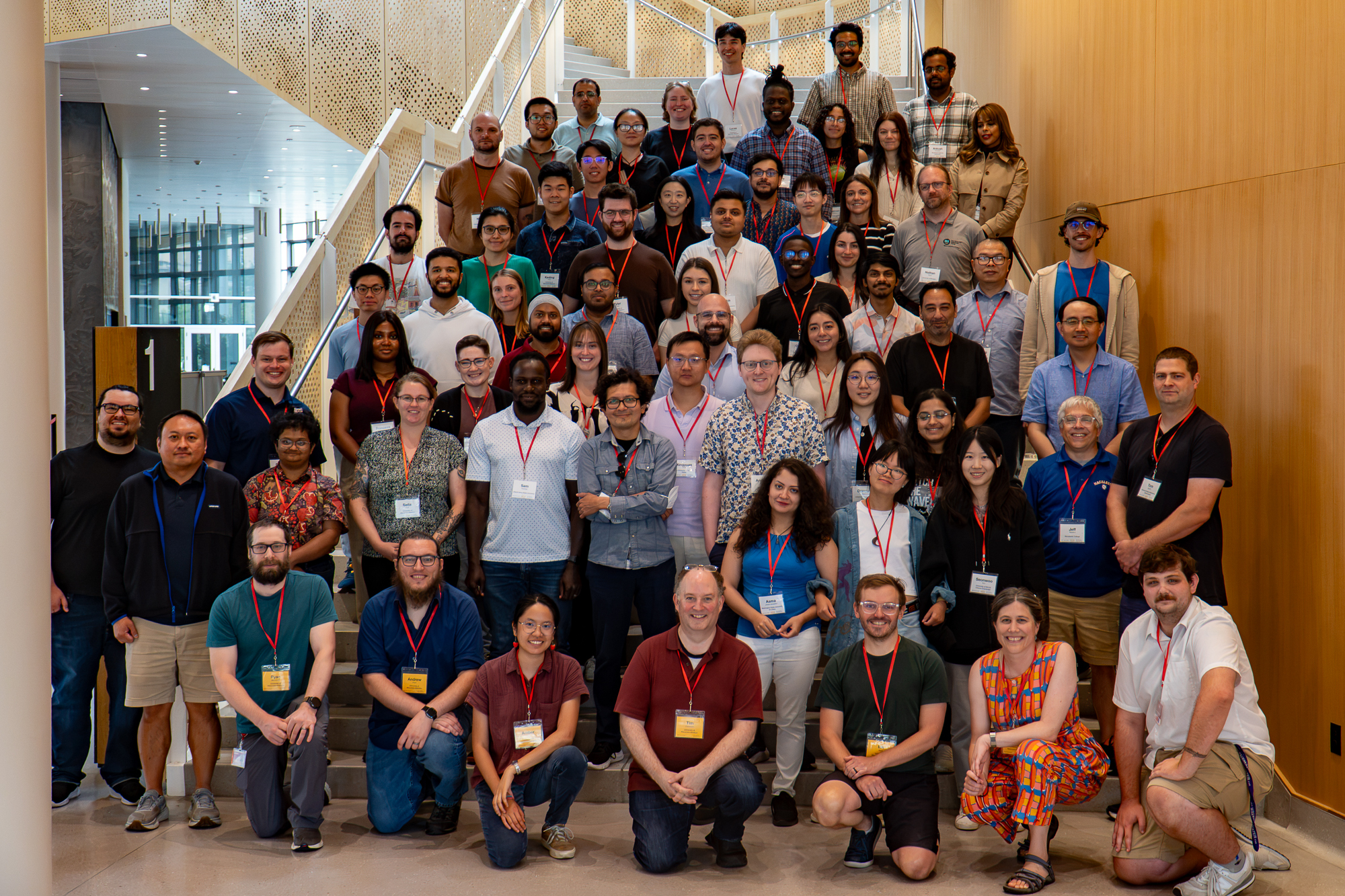
Over the course of a week this July, 55 researchers from 30 institutions across the United States gathered in Madison, WI, for the 17th OSG School, an annual educational program for researchers and facilitators who want to improve their high throughput computing (HTC) knowledge and tool set led by OSG School Director Tim Cartwright and CHTC Research Facilitation Team Lead Christina Koch.
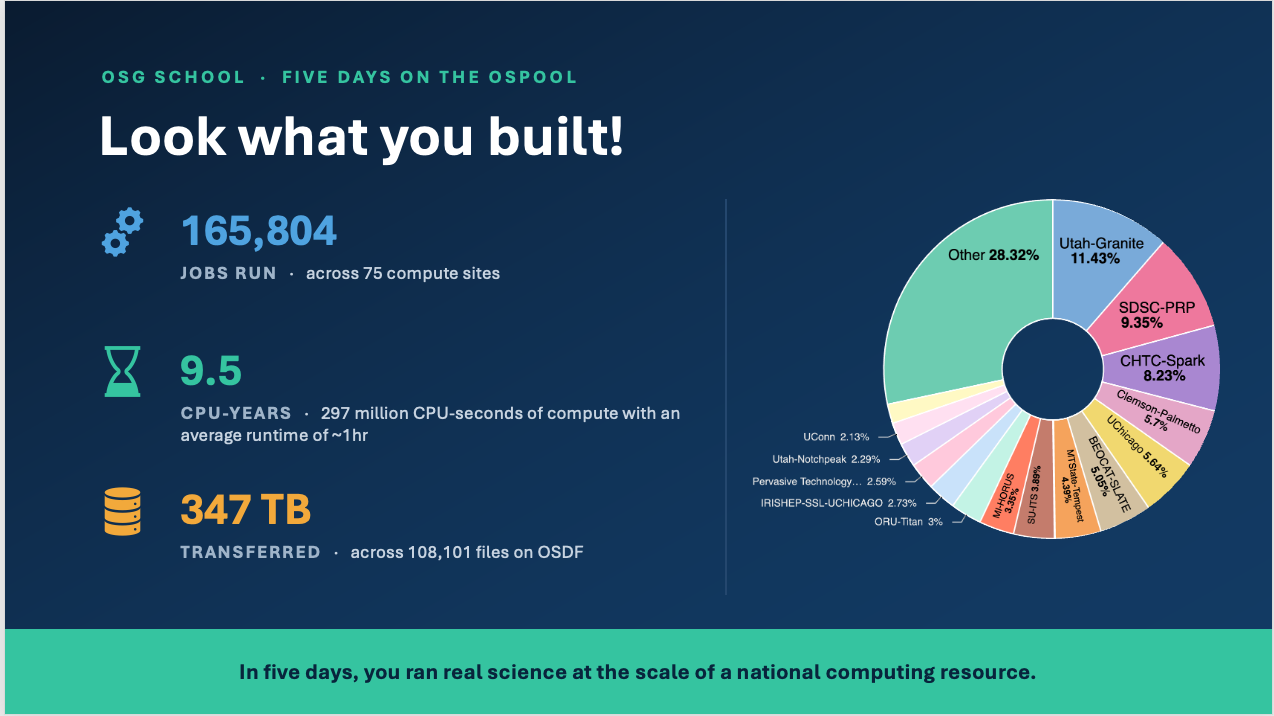
Displaying their new found skills, by the end of the school week, the students had run 165,804 jobs across 75 compute sites on the OSPool, the equivalent of 9.5 CPU years, and transferred 347 terabytes of data across 108,101 OSDF files.
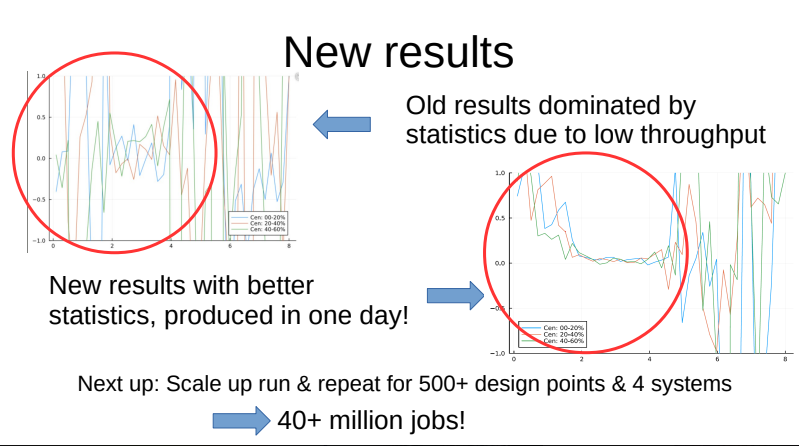
This year’s OSG School participants spanned over 10 areas of research, including physics, astronomy, engineering, biology, and political science. In addition to lectures and hands-on activities led by CHTC staff, OSG School students presented lightning talks showing how they’re incorporating HTC capabilities into their research work. Andreas Kirchner, from Duke University, boosted his heavy-ion collision simulations from running on just 15% of available machines to 86% by rethinking how jobs request resources, unlocking the path toward 40 million simulated collisions. Georgia Tech’s Sofia Stepanoff used OSPool capacity to compress a season’s worth of neutrino-detector data processing from 152 hours down to just 30, while Laura Cabral from the University of Pittsburgh is scaling her traumatic brain injury research from 500 local participants toward the UK Biobank’s 40,000, vastly increasing the scale of her research.
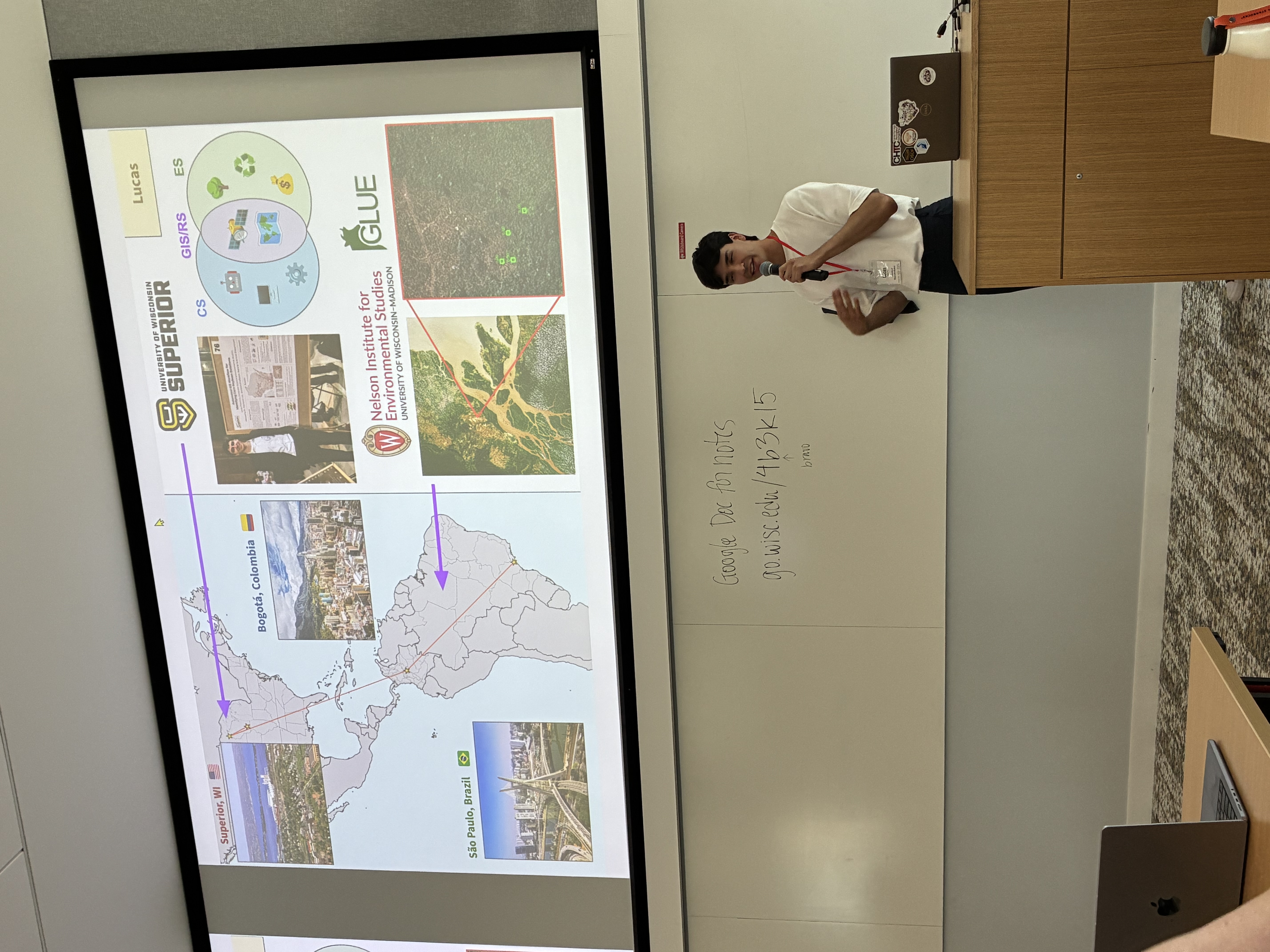
The OSG School is an annual, in person event, taking place at UW-Madison every summer. Applications for next year’s School are expected to open in March, 2027.
The School is ideal for: Researchers (especially graduate students and post-docs) in any research area for which large-scale computing is a vital part of the research process; Anyone (especially students and staff) who supports researchers who are current or potential users of high-throughput computing; Instructors (at the post-secondary level) who teach future researchers and see value in integrating high-throughput computing into their curriculum. People accepted to this program will receive financial support for basic travel and local costs associated with the School.