NSF State and Regional AI Infrastructure Hubs: The PATh team is ready and eager to help
The National Science Foundation AI Infrastructure Hubs Solicitation (NSF 26-513) envisions Hubs that “leverage cyberinfrastructure investments” such as the OSPool service provided by PATh. The PATh Partnership provides software and services for sharing computing capacity at the state, regional, and national scales.
Writing a proposal? Have an early concept? Contact us now at [email protected] with design ideas, questions, or requests for letters of support regarding your AI Hub.
The PATh team has experience offering guidance to projects throughout the proposal phase and for offering software tools and services during the operation phase.
Questions or a request for a letter of support?
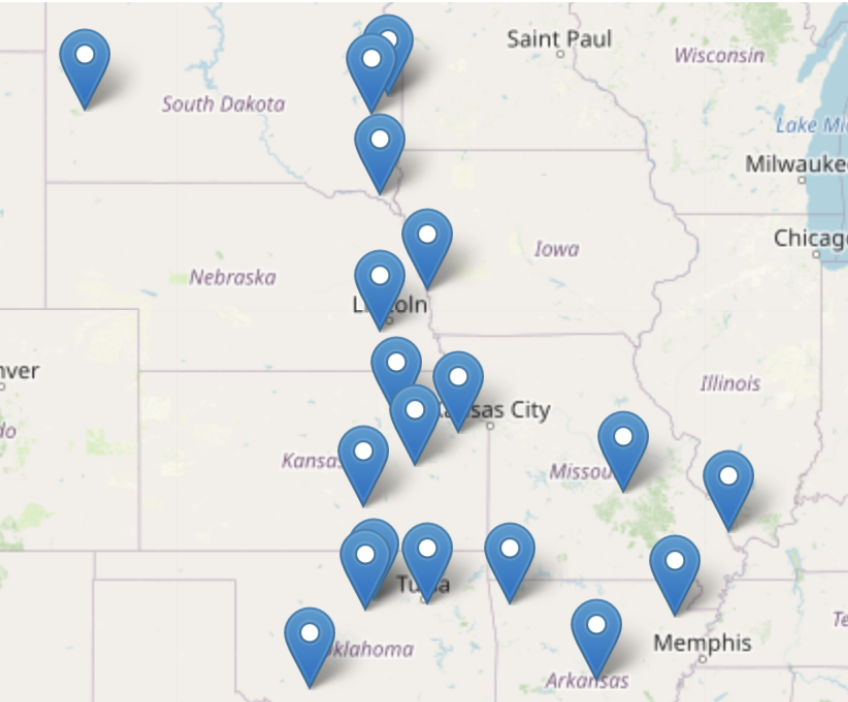
Contact the PATh TeamEvery year, PATh collaborates with regions to help share and utilize compute capacity.
Frequently asked questions
The PATh team can connect independent, autonomous clusters or data repositories together into a coherent service for data or compute workflows. Researchers or educators can then login to an access point that is able to use the combined capacity of the integrated system.
For example, the OSPool service aggregates available capacity from over 100 institutions and presents it as one large pool, using the HTCondor Software Suite, that researchers can use for their workflows.
On-premise clusters across a region can be aggregated together into a single service or available capacity can be added to the OSPool to maximize a project’s return-on-investment for science.
PATh services are available at no charge.
These services are supported through multiple NSF-funded projects under the OSG Consortium. The PATh project started in 2020 and runs until 2027; the FabAID project, which provides support for much of the same services and technology, started in 2026 and is scheduled to run through 2031.
The PATh leadership team is happy to work on design concepts for an integration and, for proposals, provide a letter of collaboration.
We are happy to schedule meetings on how to best integrate parts of your AI Hub with each other across a region or with the national cyberinfrastructure.
A typical compute integration with a SLURM cluster involves adding a SSH login for a PATh service account and enabling outgoing network access from the worker nodes. The PATh user will submit SLURM jobs that, when run, will add the allocated resources (CPUs, GPUs, memory) to the desired pool.
A common data integration involves setting up an origin service (this can be hosted by PATh) to connect an existing data repository, via a mounted filesystem, remotely-accessible S3 bucket, or HTTP API, to the nationwide Open Science Data Federation (OSDF). This allows remote access to the data, scale-out for repeat use, and management of overall load on your storage.
PATh works closely with the National Research Platform (NRP) to advance science.
The NRP’s core is a distributed Kubernetes cluster, Nautilus. Individual nodes can be joined to Nautilus and researchers can run almost any Kubernetes-based workload on the hardware. NRP remotely installs the OS and Kubernetes services; universities save system administrator time and benefit from high-level, “click to deploy” services like JupyterHub or LLM endpoints.
PATh provides throughput computing and data services layered on top of independent, autonomous clusters and repositories. The owner – e.g., the university running the cluster – remains in control of the hardware and decides the scheduling or sharing policy for the capacity. For example, through SLURM configuration, the local system administrator may decide “75% of the GPUs go to local researchers and 25% are shared in my region”.
PATh and NRP can be layered together: a university may join their hardware to the NRP and then access it through PATh’s NRP integration. On any given day, hundreds of GPUs in the NRP are accessed by workloads through this integration.
For more examples, see: